

Ceramides: The Lipids That Keep Winter Skin Comfortable
If your skin feels tight after cleansing, looks a little dull, or has started to flake in patches you never used to notice, winter is almost certainly the culprit. As temperatures drop across the Highveld and indoor heaters dry the air even further, skin loses water faster than it can replace it. The result is that familiar cold-season discomfort: tightness, sensitivity, and a complexion that simply will not hold onto moisture. The single most useful ingredient for this season is one many people have never consciously chosen — ceramides.
At Daily Skin we spend a lot of the cooler months helping people calm and rebuild stressed skin, and ceramides sit at the heart of almost every recommendation we make. Here is what they are, why they matter so much in winter, and the professional formulas we trust to deliver them.
What are ceramides, exactly?
Ceramides are lipids — fats — that occur naturally in your skin. They make up roughly half of the outermost layer of the skin, where they sit between your skin cells and hold everything together. Dermatologists at the Cleveland Clinic describe them memorably as the “grout” that keeps the building blocks of the skin functioning as a barrier between the inside and outside world. Your skin cells are the tiles; ceramides are the grout that seals the gaps.
When that grout is intact, water stays in and irritants stay out. When it is depleted — by cold weather, hot showers, over-exfoliation, harsh cleansers or simply age — the barrier becomes leaky. Moisture escapes, and the environment gets easier access to the living skin underneath. That is when you feel tightness, see flaking, and notice that products which normally sit comfortably suddenly sting.
- What they are: naturally-occurring lipids that make up about half of your skin's outer barrier.
- What they do: seal moisture in and keep irritants out — the “grout” between skin cells.
- Why winter: cold, dry, heated air strips lipids faster, leaving skin tight, flaky and reactive.
- Who they suit: everyone — especially dry, sensitive, mature or post-treatment skin.
- How to use: in your moisturiser, morning and night, ideally over a hydrating serum.
Why ceramides matter more in winter
Skin makes fewer of its own lipids as the temperature falls, and what it does make is constantly being washed away by the longer, hotter showers we all reach for in the cold. Heated indoor air has very low humidity, so it pulls moisture out of the skin around the clock. For anyone already prone to dry skin or sensitivity, this is the season when the barrier is most likely to break down.
Replacing ceramides topically tops up what winter is taking away. Used consistently, a ceramide-rich moisturiser helps restore the barrier so skin holds water, feels comfortable, and tolerates the rest of your routine — including active ingredients like vitamin C or retinaldehyde, which become much harder to use on a compromised barrier. (If your barrier already feels damaged, our guide to barrier repair through winter is a good companion read.)
The ceramide products we recommend
Ceramides work best as part of a barrier-supporting routine rather than a single hero step, so we've grouped our picks across cleansing, treating and moisturising — and across price points.
Start gentle. Cold-weather skin does not need a stripping cleanser. The Lamelle Serra Cleansing Gel (R275) is soap-free and cleanses without disrupting the barrier you're trying to protect — a sensible, affordable first step.
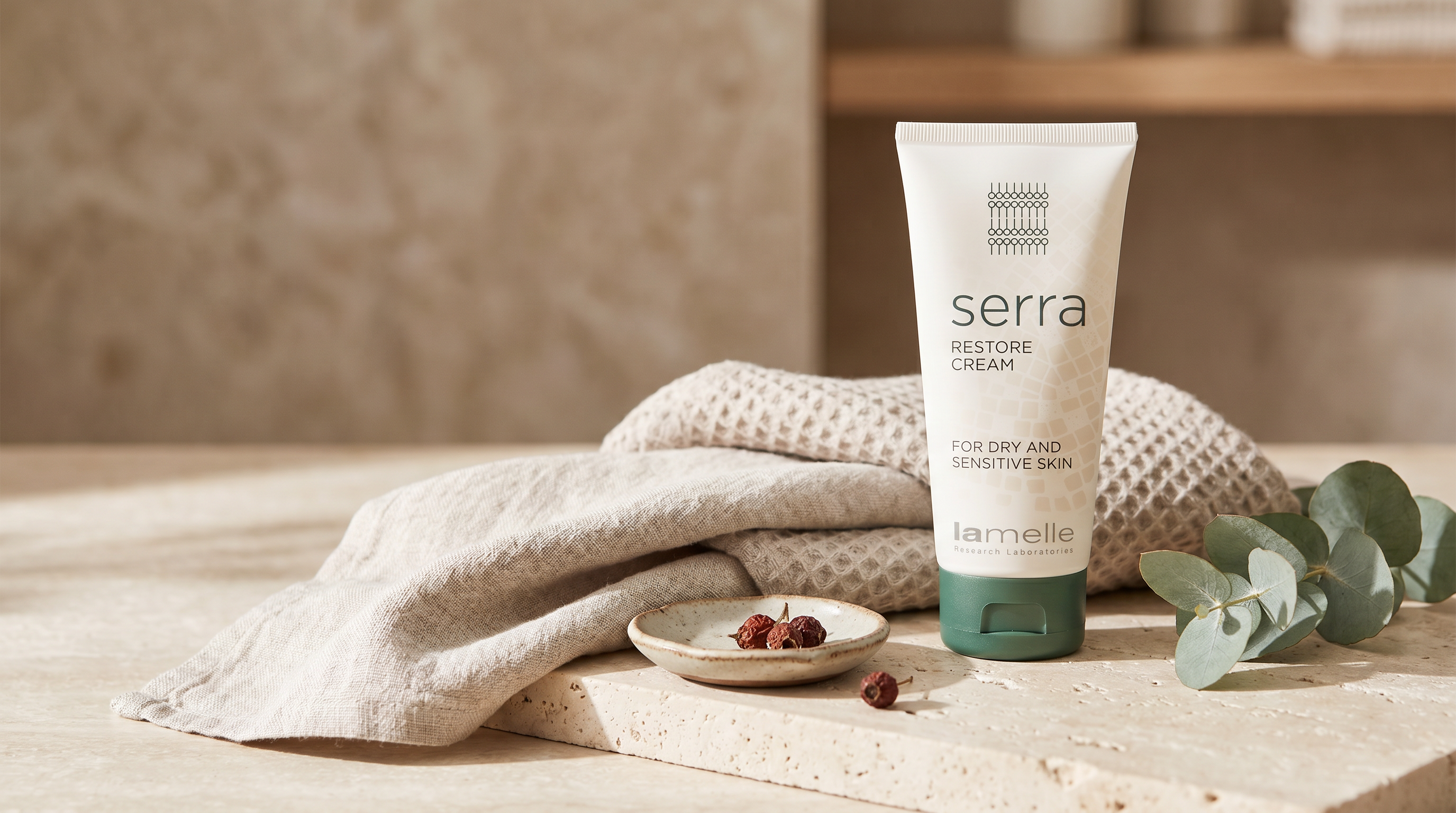
The everyday hero. The Lamelle Serra Restore Cream (R665) is one of our most repeat-purchased creams for good reason. It pairs Ceramide-P with fatty acids and shea butter to rebuild and strengthen dry, sensitive or compromised skin. It's the cream we reach for most when someone describes classic winter tightness. If your skin runs more reactive or red, the Lamelle Serra Soothing Cream (R905) adds extra calming actives.
A budget-friendly all-rounder. The DermaFix Bio-Hydrating Cream (R641) is a rich but non-greasy moisturiser that layers hyaluronic acid with barrier-supporting lipids — a great option for dehydrated, tight-feeling skin.
A weekly reset. When skin is really struggling, the Lamelle Serra Lipid Recovery Mask (R615) delivers an intensive dose of ceramides and fatty acids to flooded, flaky skin in fifteen minutes.
Treat overnight. For mature skin that wants barrier support and anti-ageing benefits in one, the Lamelle Dermaheal Ultra Renewal Cream (R2,300) is a corrective night treatment built around Ceramide-P, growth factors and hyaluronic acid. And don't forget the delicate eye area, where the barrier is thinnest of all — the DermaFix Ceramide Eye Complex (R467) brings the same barrier thinking to the under-eye.
How to build a simple winter ceramide routine
- Cleanse with a gentle, non-stripping wash, morning and night.
- Hydrate on slightly damp skin with a humectant serum (hyaluronic acid is ideal) to give your ceramide cream water to seal in.
- Seal with a ceramide-rich moisturiser while skin is still a little damp.
- Protect every morning with SPF — winter sun still ages and pigments skin.
- Boost once or twice a week with a lipid-rich mask when skin feels especially tight.
Browse our full edit of barrier creams and moisturisers if you'd like to compare options for your skin.
Frequently asked questions
Can oily skin use ceramides? Yes. Ceramides repair the barrier rather than add heaviness, and a damaged barrier can actually make oily skin produce more oil. Choose a lighter ceramide lotion or gel-cream if you're worried about richness.
Do ceramides work with retinol and acids? Beautifully — in fact they're the perfect partner. A strong barrier helps skin tolerate actives, so a ceramide moisturiser makes vitamin A and exfoliating acids far more comfortable to use.
How long until I see a difference? Relief from tightness is often immediate. Genuine barrier rebuilding takes consistent use over two to four weeks.
Are synthetic ceramides as good as natural ones? Yes. The synthetic ceramides used in professional formulas are structurally matched to your skin's own and are well researched for barrier repair.
The bottom line
Winter is hard on the skin barrier, and ceramides are the most direct way to support it. If your skin feels tight, dull or reactive right now, a ceramide-rich moisturiser is the kindest change you can make this season. Not sure which formula suits your skin? Explore our dry-skin edit or reach out — we're always happy to help you build a routine that keeps your skin comfortable until spring.


