

Peptides and Growth Factors, Explained: The Messengers Behind Firmer Skin
Peptides have quietly become one of the most talked-about words on a skincare label, and for good reason. They sit behind several of the products our clients return for again and again, including the Lamelle Dermaheal range that leads our best-sellers right now. But the word "peptide" on a box tells you surprisingly little on its own, because it describes a whole family of ingredients that do quite different jobs. Here is what peptides actually are, the main types you will meet, and how to choose one that genuinely suits your skin.
First, what is a peptide?
Your skin gets its firmness and bounce from proteins, chiefly collagen and elastin. Peptides are short chains of amino acids, the same building blocks those proteins are made from. Applied topically, the useful peptides behave like messengers: they signal skin cells to carry out helpful tasks, supporting the skin's own maintenance and repair. They tend to be gentle, well tolerated, and they sit comfortably alongside almost everything else in a routine, which is a large part of why formulators love them.
The important thing to understand is that "peptide" is not one ingredient. The peptides you will find in clinical skincare fall broadly into four groups, and knowing which is which makes choosing far easier.
The four families worth knowing
1. Signal peptides. These are the classic "firming" peptides, such as palmitoyl tripeptides and SYN‑COLL. They prompt the skin to support its own structural proteins, which over time can help skin look firmer and smoother. DermaFix Dermalift is built around this idea.
2. Carrier peptides. The best known is copper peptide (GHK‑Cu), which delivers trace copper into the skin and is associated with skin resilience and a healthy repair response. We wrote about this one in detail in our copper peptides guide; the standalone treatment is DermaFix ACC Copper Peptide.
3. Neuropeptides. Sometimes called "relaxing" peptides, ingredients such as Argireline (acetyl hexapeptide) are used to soften the look of expression lines. You will find this class in DermaFix Decelerate Peptides.
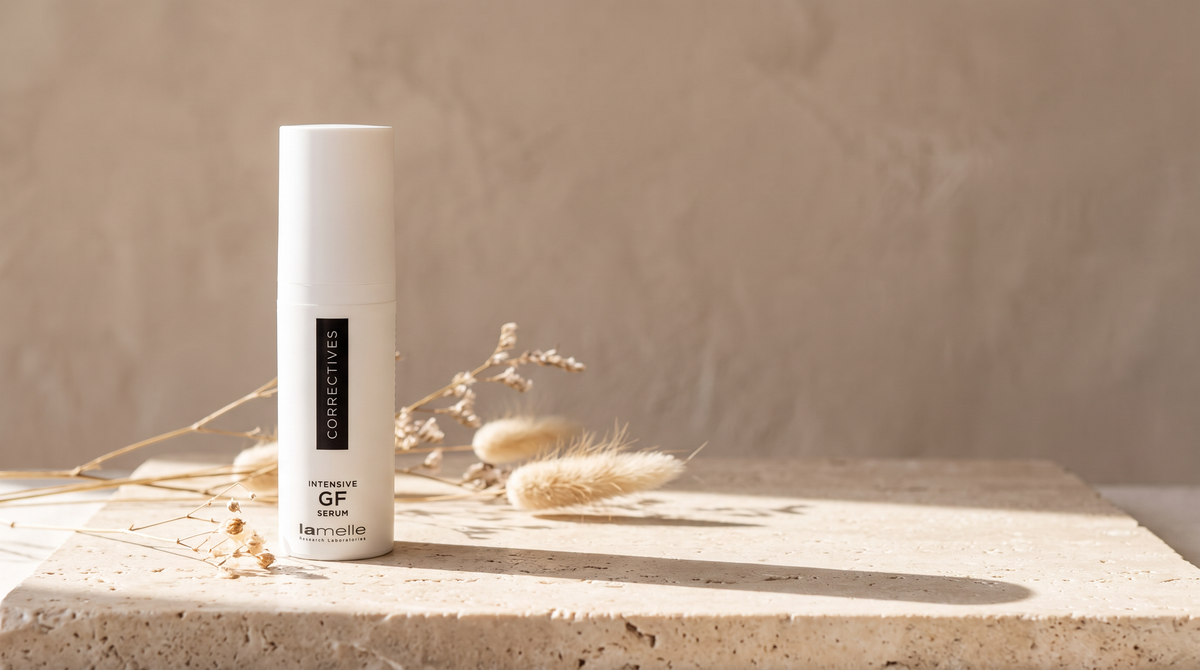
4. Growth factors and cytokines. Closely related messengers that speak to skin cells about renewal and repair. Lamelle's Dermaheal range is built around biomimetic growth factors, and the concentrated version is the Lamelle Intensive GF Serum. Reviews of cosmetic peptides now group these families in much the same way, from signal and carrier peptides through to neurotransmitter-inhibiting types (Biomolecules, 2025).
The quick version
• Peptides are amino-acid messengers that support the skin's own firmness and repair processes.
• There are four broad types: signal (firming), carrier (copper, resilience), neuropeptides (expression lines) and growth factors (renewal).
• They are gentle and layer well, morning or night, with serums or creams.
• Think of peptides as steady, supportive care rather than a quick fix; they reward consistency.
What we stock, across the range
Because peptides appear in everything from an everyday moisturiser to a concentrated serum, there is a comfortable entry point at most budgets.
A gentle place to start. Lamelle Serra Restore Cream (R665) pairs a Serra peptide complex with barrier lipids, so it supports firmness while keeping skin calm and comfortable, a good all-rounder for sensitive or barrier-compromised skin.
Targeted treatments. DermaFix ACC Copper Peptide (R698) for resilience, DermaFix Regenerate Rx EGF (R767) for a renewal-focused growth-factor treatment, DermaFix Dermalift (R851) for firmness, and DermaFix Decelerate Peptides (R924) for the look of expression lines.
The considered step up. Our most-loved options come from Lamelle Dermaheal: the Aging Reversal Neck Serum (R1,070) for the neck and jaw, and the Dermaheal Renewal Cream (R1,420), a growth-factor-rich treatment cream that is comfortably our top seller at the moment. The Intensive GF Serum (R1,085) is the concentrated serum if you prefer to layer.
How to bring peptides into your routine
Peptides are refreshingly easy to use, which is why we recommend them so often in the clinic.
• Choose by goal. Firmness and fine lines: a signal-peptide or growth-factor treatment. Post-treatment or reactive skin: a carrier peptide or a barrier-supporting peptide cream. Expression lines: a neuropeptide.
• Serum before cream. If you use a peptide serum, apply it to clean skin and follow with your moisturiser. If your peptides are in the cream itself, that is your last leave-on step at night.
• They play well with others. Peptides sit happily with hyaluronic acid, niacinamide and vitamin C. If you also use a retinoid, peptides are a gentle partner; see our guide to vitamin A for how to introduce one.
• Give it time. Peptides are supportive rather than dramatic, and skin renewal is slow, so judge results over a few months, not days.
• Still wear SPF. No peptide replaces daily sun protection, which remains the single most effective step for keeping skin firm and even.
Frequently asked
Are peptides better than retinol? They are not rivals. Retinoids and peptides work in different ways and are often used together, one supporting renewal and the other supporting structure. Peptides are usually the gentler of the two, which makes them a good option for sensitive skin.
Can I use more than one peptide product? Yes. Because they are well tolerated, layering a peptide serum under a peptide cream is perfectly reasonable, and different peptides can be complementary.
Morning or night? Either. Many people apply peptides twice daily. If your routine is busy, night is a sensible default so they work while you sleep.
Do peptides suit sensitive skin? Generally, yes. They are among the better-tolerated actives, which is why we often reach for a peptide cream such as Serra Restore when skin needs support without irritation.
If you would like help matching a peptide to your skin, the brands we curate, from Lamelle to DermaFix, give us plenty of room to tailor a routine. Browse the full firming and ageing edit or explore our serums, and reach out any time for a considered recommendation. Your skin, your ritual, your daily.
Sources: Peptides: Emerging Candidates for the Prevention and Treatment of Skin Senescence, Biomolecules (2025); The role of topical peptides in skincare, The PMFA Journal. Educational information only, not medical advice.


