Skincare Through Menopause: A Firming, Replenishing Routine
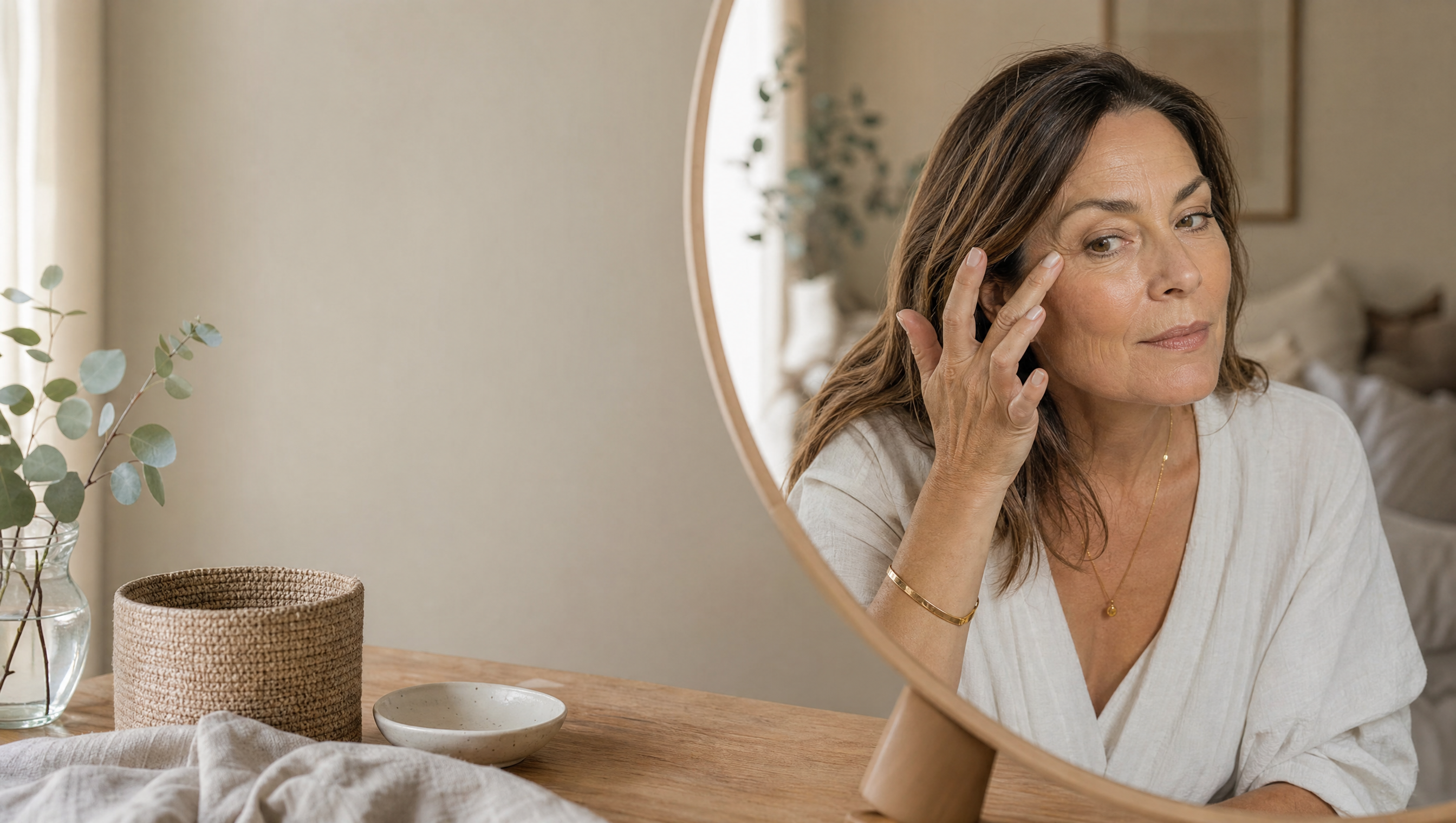
Somewhere in the mid-forties to mid-fifties, many women notice their skin behaving like a different organ altogether. Creams that worked for years suddenly feel like they do nothing. Skin looks flatter by mid-afternoon, feels tight after cleansing, and loses that quiet bounce along the jaw and cheeks. This is not your imagination, and it is not a failure of your routine. It is one of the most predictable events in skin biology: menopause.
At Daily Skin we field a lot of quiet questions about this stage, usually phrased as “what changed?” The honest answer is that the skin is responding to a real hormonal shift, and it responds beautifully when the routine is adjusted to meet it. Here is what is happening, and the calm, professional approach we recommend.
Why menopausal skin changes
The headline driver is oestrogen. Skin is rich in oestrogen receptors, and this hormone helps maintain collagen, elastin and the skin’s ability to hold water. As oestrogen declines through perimenopause and menopause, all three come under pressure at once.
The numbers are striking. Research summarised in a 2025 narrative review in the dermatology literature notes that women can lose a meaningful share of dermal collagen in the first years after menopause, followed by a slower ongoing decline. Less collagen and elastin means less firmness and more fine lines. A weaker moisture barrier means more dryness, more sensitivity and duller-looking skin. Oil production often drops too, which is why skin that was once combination can turn genuinely dry.
None of this means the situation is fixed or hopeless. It means the priorities shift: from oil-control and blemish-fighting towards rebuilding, replenishing and protecting. Topical skincare cannot replace lost hormones, but the right actives visibly support firmness, comfort and radiance.
The quick version
- Falling oestrogen reduces collagen, elastin and moisture retention — hence looser, drier, more reactive skin.
- Shift your routine towards gentle cleansing, deep hydration, growth factors or peptides, a tolerable retinoid and daily SPF.
- Richer textures are your friend now; harsh, stripping or strongly astringent products are not.
- Consistency matters more than any single “miracle” product — give a routine 8 to 12 weeks.
A routine built for this stage
1. Cleanse gently. Foaming, squeaky-clean cleansers strip an already-compromised barrier. Swap to something creamy and replenishing such as the Lamelle Nourish Daily Cleanse (R345), which cleans without leaving skin tight.
2. Rehydrate with a humectant serum. Menopausal skin loses water quickly, so a hyaluronic acid serum is a worthwhile daily habit. The Lamelle Correctives HA + Serum (R885) layers several molecular weights of hydration and sits happily under a moisturiser. (New to this ingredient? Our guide to hyaluronic acid explains how to use it well.)
3. Support firmness with growth factors or peptides. This is where menopausal routines earn their keep. Growth-factor and peptide serums are designed to encourage the skin’s own repair signalling. The Lamelle Intensive GF Serum (R1,085) is a well-loved mid-tier option; for a premium step up, the iS Clinical Firming Complex (R3,381) pairs copper-tripeptide growth factors with hyaluronic acid. Copper peptides are a quiet hero here — we explain why in our copper peptides piece.
4. Add a retinoid you can actually tolerate. Vitamin A remains the most evidence-backed ingredient for firmness and texture, but menopausal skin needs a gentle on-ramp. The Lamelle RA Cream (R1,030) is a considered starting point a few nights a week. If you are weighing your options, our retinol vs retinaldehyde guide is a good primer.
5. Seal it in with a richer moisturiser. Textures that felt heavy in your thirties are often exactly right now. The Lamelle Dermaheal Renewal Cream (R1,420) is one of our best-loved replenishing creams; a lighter-budget option is the Lamelle Nourish Revitalise Cream (R820), and for a true indulgence the Lamelle Refirm Elixir Cream (R3,390) sits at the top of the range.
6. Do not forget the neck and eyes. These areas thin noticeably at this stage. A dedicated treatment such as the Lamelle Dermaheal Aging Reversal Neck Serum (R1,070) and an eye product like the iS Clinical C Eye Serum Advance+ (R1,666) round out the routine.
7. Protect every morning. Sun exposure accelerates exactly the collagen loss you are trying to slow. A daily broad-spectrum SPF such as Heliocare 360° Sensation SPF 50+ (R631) is non-negotiable, in every season. Browse the full sunscreen collection to find a finish you enjoy wearing.
How to start without overwhelming your skin
You do not need all seven steps on day one. A sensible order of priority:
- Get cleansing, a hydrating serum, a rich moisturiser and daily SPF right first.
- After two weeks, introduce a growth-factor or peptide serum.
- Once skin feels comfortable, add a retinoid a few nights a week and build up slowly.
- Layer in neck and eye care as your budget allows.
Explore more in our ageing, fine lines and serums collections.
Frequently asked questions
Can skincare reverse menopausal changes? No product replaces oestrogen, and it is fair to be sceptical of anything claiming to. What good skincare can do is visibly improve firmness, hydration, comfort and radiance, and help protect the collagen you have. That is a meaningful, realistic goal.
My skin suddenly feels sensitive — is that normal? Very. A weaker barrier reacts more easily. Lean on gentle cleansing and barrier-supportive creams like the Lamelle Serra Restore Cream (R665), and introduce actives one at a time.
Is it too late to start a retinoid in my fifties or sixties? Not at all. Skin responds to vitamin A at any age — the key is starting low and slow so you build tolerance rather than irritation.
How long until I see a difference? Hydration and comfort can improve within days. Firmness and texture changes follow the skin’s renewal cycle, so give any routine a fair 8 to 12 weeks of consistent use.
A gentle next step
Menopausal skin is not a problem to fight so much as a new set of needs to meet. If you would like help tailoring these steps to your skin, our team is always happy to talk it through — you can get in touch here. Browse the full Lamelle range, trusted in our clinic, whenever you are ready.